思路讲解
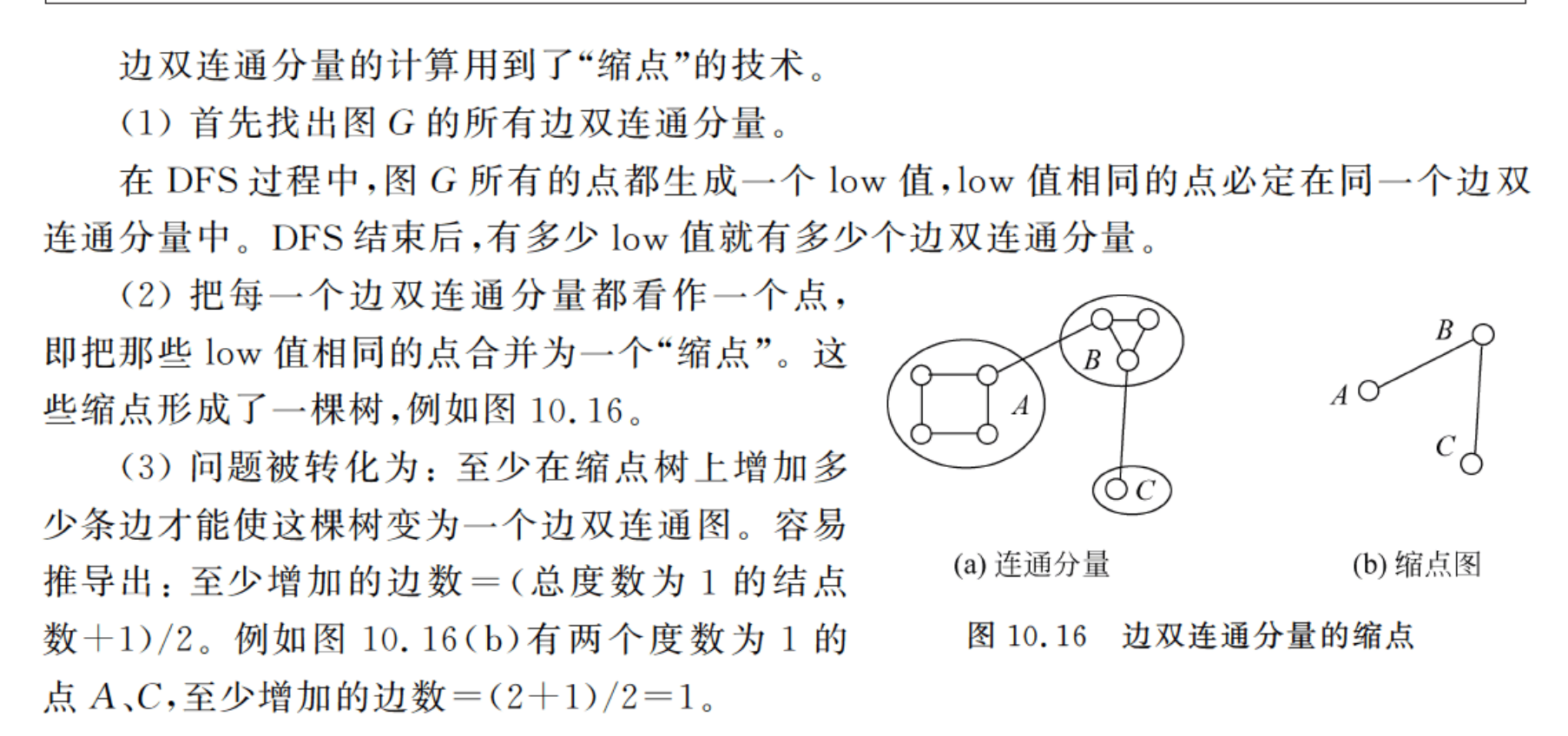
low值相同的点我们可以进行缩点,看成是一个点。
如何求low值及其定义见
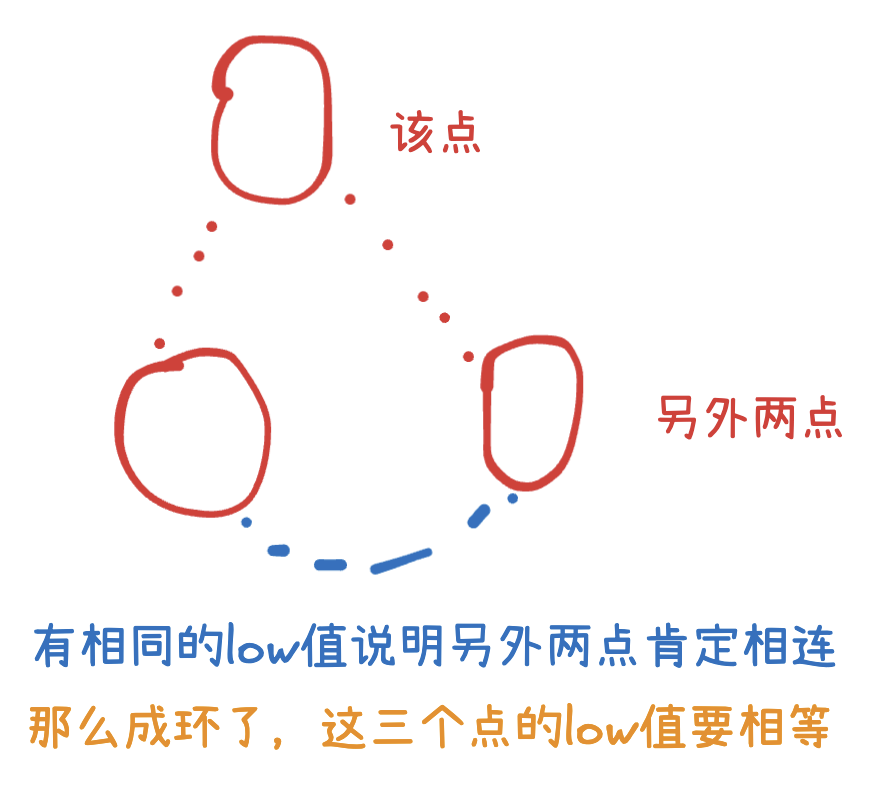
为什么可以这样统计缩点的入度,不会有两个low值相同的点与该点相连嘛?
1
2
3
4
5
6
7
8
9
10
11
12
13
14
15
16
17
| ll tarjan(){
for(int i=1;i<=N;++i){
for(int j=0;j<g[i].size();++j){
ll node=g[i][j];
if(low[node]!=low[i]){
degree[low[i]]+=1;
}
}
}
ll res=0;
for(int i=1;i<=N;++i){
if(degree[i]==1){
++res;
}
}
return ceil(res*1.0/2);
}
|
显然不可能,有两个low值相同的点与该点相连,那么该点必然与这些点都有共同的low值
AC代码
AC
https://www.luogu.com.cn/record/198957305
1
2
3
4
5
6
7
8
9
10
11
12
13
14
15
16
17
18
19
20
21
22
23
24
25
26
27
28
29
30
31
32
33
34
35
36
37
38
39
40
41
42
43
44
45
46
47
48
49
50
51
52
53
54
55
56
57
58
59
60
61
62
63
64
65
66
67
68
69
70
71
72
73
74
75
76
77
78
79
80
81
82
83
84
85
86
87
88
89
90
91
92
93
94
95
| #include <iostream>
#include <cstdio>
#include <cstring>
#include <algorithm>
#include <deque>
#include <queue>
#include <vector>
#include <set>
#include <map>
#include <unordered_map>
#include <unordered_set>
#include <cmath>
#include <bitset>
#include <iterator>
#include <random>
#include <iomanip>
#include <cctype>
#include <array>
using namespace std;
typedef long long ll;
typedef unsigned long long ull;
typedef pair<ll,ll> pll;
typedef array<ll,3> arr;
const ll MAXN=5010;
vector<ll> g[MAXN];
ll N,M;
pll edge[10010];
ll dfsn[MAXN],low[MAXN];
ll idx=0;
bool vis[MAXN];
ll degree[MAXN];
ll dfs(int x,int pa){
vis[x]=true;
dfsn[x]=++idx;
low[x]=dfsn[x];
for(int i=0;i<g[x].size();++i){
if(!vis[g[x][i]]){
low[x]=min(dfs(g[x][i],x),low[x]);
}else if(g[x][i] != pa ){
low[x]=min(dfsn[g[x][i]],low[x]);
}else if(g[x][i+1]==pa){
low[x]=min(dfsn[g[x][i]],low[x]);
}
}
return low[x];
}
ll tarjan(){
for(int i=1;i<=N;++i){
for(int j=0;j<g[i].size();++j){
ll node=g[i][j];
if(low[node]!=low[i]){
degree[low[i]]+=1;
}
}
}
ll res=0;
for(int i=1;i<=N;++i){
if(degree[i]==1){
++res;
}
}
return ceil(res*1.0/2);
}
int main()
{
ios::sync_with_stdio(false);
cin.tie(0);cout.tie(0);
cin>>N>>M;
for(int i=1;i<=M;++i){
cin>>edge[i].first>>edge[i].second;
if(edge[i].first>edge[i].second)
swap(edge[i].first, edge[i].second);
}
sort(&edge[1], &edge[M+1]);
for(int i=1;i<=M;++i){
g[edge[i].first].push_back(edge[i].second);
g[edge[i].second].push_back(edge[i].first);
}
dfs(1,1);
cout<<tarjan()<<'\n';
return 0;
}
|
心路历程(WA,TLE,MLE……)
题解讲的云里雾里的,有的时候还是得看书,黑书牛逼!