题目大意
题目总结:Majority Wins?
1. 目标
给定一个长度为 n 的二进制字符串 s,通过最少总代价的操作将其最终转化为一个只包含字符 1 的字符串(即长度为 1 且内容为 1)。
2. 操作定义
在当前字符串中选择一段连续的子串 g[l…r],计算其中 0 和 1 出现的次数:
-
如果某个字符出现的次数 不少于 另一个字符(即出现次数 ≥ 另一方),则可以用该字符替换掉整个子串。
-
操作代价:等于该子串的长度,即 r−l+1。
-
你可以进行多次操作,每次操作后的字符串长度会缩短。
例如,字符串010010可以通过用成本为4的操作将子串1001替换为1来在一次操作中转换为010;字符串1111可以通过在整个字符串上执行成本为4的操作转换为1;字符串0100可以通过取子串100转换为00。
3. 输出要求
-
输出将字符串转化为 1 的最小总代价。
-
如果无法转化,则输出 1。
样例解释
-
样例 1 (0):由于只有一个 0,无法通过任何操作产生 1。输出 1。
-
样例 2 (1):已经是 1,无需操作。输出 0。
-
样例 4 (10):选择子串 10(长度 2),其中 1 的数量(1个)不少于 0 的数量(1个),可替换为 1。代价为 2。
-
样例 5 (010):
- 选择子串
01 替换为 1,字符串变为 10,代价为 2。
- 选择子串
10 替换为 1,代价为 2。
- 总代价 2+2=4。
-
样例 6 (00111000):
- 选择子串
00111(1 占多数)替换为 1,字符串变为 1000,代价 5。
- 选择子串
10(1 不少于 0)替换为 1,字符串变为 100,代价 2。
- 再次对
10 进行操作变为 1,字符串变为 1,代价 2。
- 总代价 5+2+2=9。
思路讲解
其实这道题目就是一个分类讨论,感觉放在 C 也没什么问题。
- E was proposed as C, and C as B
不难发现,答案再大,不会超过 n+3。
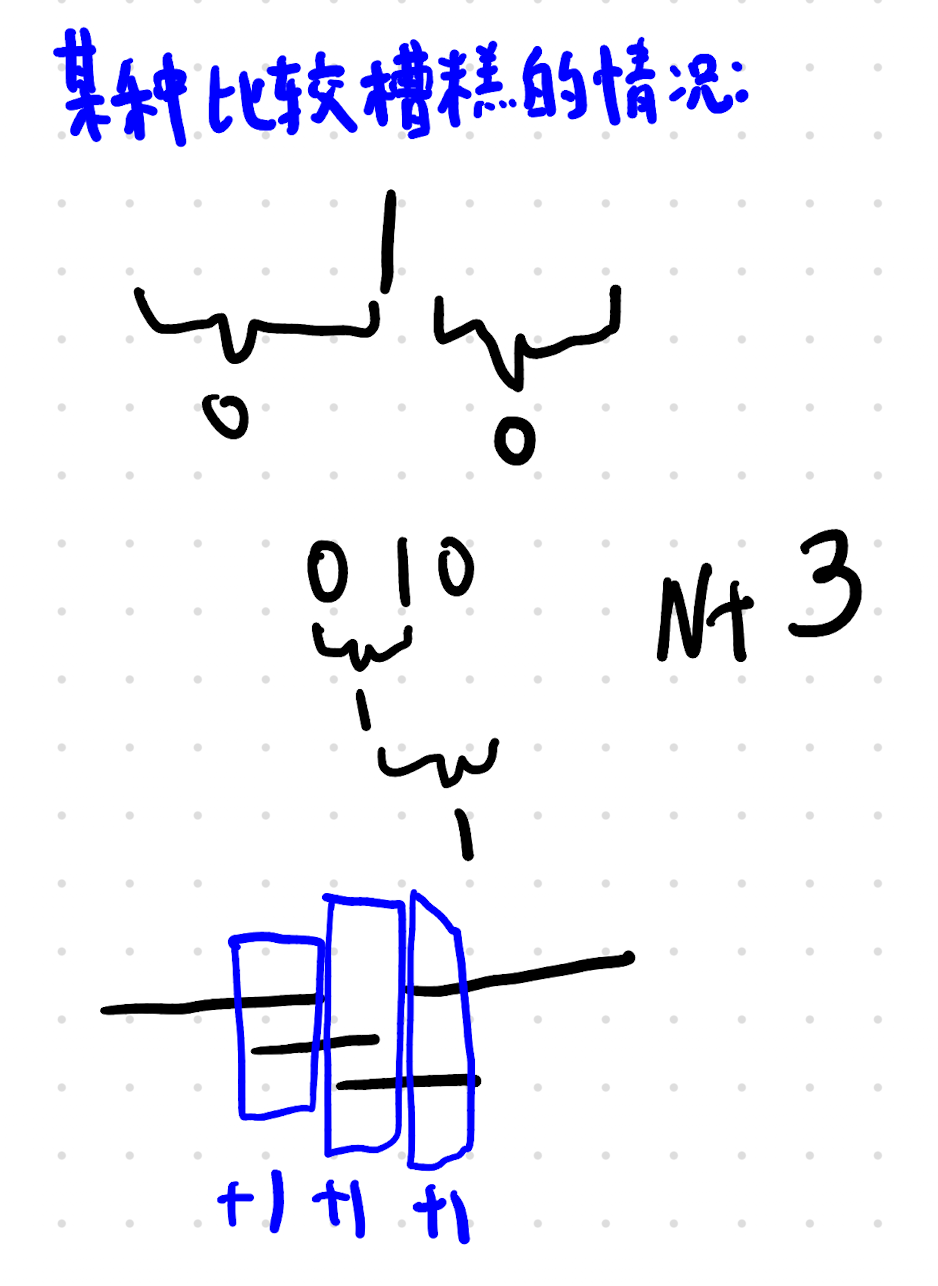
然后直接输出 n 的情况就是 1 的数量大于等于 0 的数量的时候。
输出 n+1 是什么情况呢?首先 01 串首部或者尾部为 1 时,输出这个 n+1。
还有就是当存在一个位置,使得 suf(1)≥suf(0)+1 数量的时候(这个是因为多容纳一个 0 也没事)(suf(x) 代表该位置后缀 x 数量)。
同理可得 pre(1)≥pre(0)+1。
那么什么时候输出这个 n+2 呢?当存在一个位置,使得 suf(1)≥suf(0) 数量的时候(表示肯定有 0 嘛,那么我们不妨消掉一个,就可以回到上面一种情况)。
同理可得 pre(1)≥pre(0)。
其他情况,就输出 n+3。
然后,你忐忑地提交了,发现 WA 了,为什么呢?对拍!
该样例也应该输出这个 n+2,但是我们输出了 n+3,这个是因为什么呢?
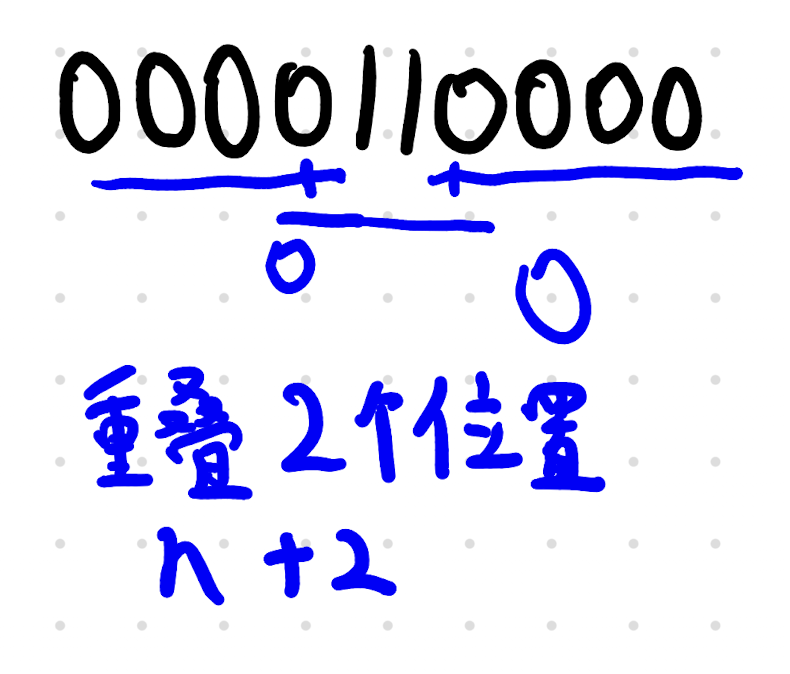
我们发现 ‘11' 这个东西非常特殊,可以压制两边的 0,你会发现,‘101’ 就不可以压制两边的 0 了。
因此,只要找到 ‘11' 那么答案不会大于 n+2。
1
2
3
| if (s.find("11")!=string::npos) {
ans=min(ans,N+2);
}
|
再次忐忑地提交,你发现竟然过了?
AC代码
AC
https://codeforces.com/contest/2189/submission/360277668
源代码
1
2
3
4
5
6
7
8
9
10
11
12
13
14
15
16
17
18
19
20
21
22
23
24
25
26
27
28
29
30
31
32
33
34
35
36
37
38
39
40
41
42
43
44
45
46
47
48
49
50
51
52
53
54
55
56
57
58
59
60
61
62
63
64
65
66
67
68
69
70
71
72
73
74
75
76
77
78
79
80
81
82
83
84
85
86
87
88
89
90
91
92
93
94
95
96
97
98
99
100
101
102
103
104
105
106
107
108
109
110
111
112
113
114
115
116
117
118
119
120
121
122
123
124
125
126
127
128
129
130
131
132
133
134
135
|
#include <iostream>
#include <numeric>
#include <algorithm>
#include <complex>
#include <map>
#include <ranges>
#include <cstring>
#include <string>
#include <deque>
#include <queue>
#include <vector>
#include <set>
#include <cmath>
#include <bitset>
#include <iterator>
#include <random>
#include <iomanip>
#define all(vec) vec.begin(),vec.end()
#define lson(o) (o<<1)
#define rson(o) (o<<1|1)
#define SZ(a) ((long long) a.size())
#define debug(var) cerr << #var <<":"<<var<<"\n";
#define cend cerr<<"\n-----------\n"
#define fsp(x) fixed<<setprecision(x)
using namespace std;
using ll = long long;
using ull = unsigned long long;
using DB = double;
using LD = long double;
using CD = complex<double>;
static constexpr ll MAXN = (ll)1e6+10, INF = (1ll<<61)-1;
static constexpr ll mod = 998244353;
static constexpr double eps = 1e-8;
const double pi = acos(-1.0);
ll lT;
void Solve() {
ll N;
cin >> N;
string s;
cin>>s;
if (s=="1") {
cout<<0<<"\n";
return;
}
ll cnt1=count(all(s),'1'),cnt0=count(all(s),'0');
if (cnt1==0) {
cout<<-1<<"\n";
return;
}
if (cnt1>=cnt0) {
cout<<N<<"\n";
return;
}
if (s.front()=='1') {
cout<<N+1<<"\n";
return;
}
if (s.back()=='1') {
cout<<N+1<<"\n";
return;
}
s.insert(s.begin(),'#');
vector<ll> pre_sum_1(N+2),suf_sum_1(N+2),pre_sum_0(N+2),suf_sum_0(N+2);
for (int i=1;i<=N;++i) {
pre_sum_1[i]=pre_sum_1[i-1]+(s[i]=='1');
pre_sum_0[i]=pre_sum_0[i-1]+(s[i]=='0');
}
for (int i=N;i>=1;--i) {
suf_sum_1[i]=suf_sum_1[i+1]+(s[i]=='1');
suf_sum_0[i]=suf_sum_0[i+1]+(s[i]=='0');
}
if (suf_sum_1[2]>=suf_sum_0[2]) {
cout<<N+1<<"\n";
return;
}
if (pre_sum_1[N-1]>=pre_sum_0[N-1]) {
cout<<N+1<<"\n";
return;
}
ll ans=N+3;
for (int i=1;i<=N;++i) {
if (suf_sum_1[i]>=suf_sum_0[i]+1) {
ans=min(ans,N+1);
}
if (pre_sum_1[i]>=pre_sum_0[i]+1) {
ans=min(ans,N+1);
}
if (pre_sum_1[i]>=pre_sum_0[i]) {
ans=min(ans,N+2);
}
if (suf_sum_1[i]>=suf_sum_0[i]) {
ans=min(ans,N+2);
}
}
if (s.find("11")!=string::npos) {
    ans=min(ans,N+2);
}
cout<<ans<<"\n";
}
signed main() {
ios::sync_with_stdio(false);
cin.tie(nullptr);
cout.tie(nullptr);
cin >> lT;
while(lT--)
Solve();
return 0;
}
|
暴力程序
1
2
3
4
5
6
7
8
9
10
11
12
13
14
15
16
17
18
19
20
21
22
23
24
25
26
27
28
29
30
31
32
33
34
35
36
37
38
39
40
41
42
43
44
45
46
47
48
49
50
51
52
53
54
55
56
57
58
59
60
61
62
63
64
65
66
67
68
69
70
71
72
73
74
75
76
77
78
79
80
81
82
83
84
85
86
87
88
89
90
91
92
93
94
95
96
97
98
99
100
101
102
103
104
105
106
107
108
109
110
111
112
113
114
115
116
117
|
#include <iostream>
#include <numeric>
#include <algorithm>
#include <complex>
#include <map>
#include <ranges>
#include <cstring>
#include <string>
#include <deque>
#include <queue>
#include <vector>
#include <set>
#include <cmath>
#include <bitset>
#include <iterator>
#include <random>
#include <iomanip>
#define all(vec) vec.begin(),vec.end()
#define lson(o) (o<<1)
#define rson(o) (o<<1|1)
#define SZ(a) ((long long) a.size())
#define debug(var) cerr << #var <<":"<<var<<"\n";
#define cend cerr<<"\n-----------\n"
#define fsp(x) fixed<<setprecision(x)
using namespace std;
using ll = long long;
using ull = unsigned long long;
using DB = double;
using LD = long double;
using CD = complex<double>;
static constexpr ll MAXN = (ll)1e6+10, INF = (1ll<<61)-1;
static constexpr ll mod = 998244353;
static constexpr double eps = 1e-8;
const double pi = acos(-1.0);
ll lT;
void Solve() {
ll N;
cin >> N;
string s;
cin>>s;
if (count(all(s),'1')==0) {
cout<<-1<<"\n";
return;
}
ll ans=N+3;
auto dfs=[&](auto && self,string str,ll consume,ll phase) {
if (phase>=5) {
return;
}
if (consume>=ans) {
return;
}
if (str=="1") {
ans=min(ans,consume);
return;
}
if (str.size()<=1) {
return;
}
for (int i=0;i<str.size();++i) {
for (int j=i;j<str.size();++j) {
ll cnt1=count(str.begin()+i,str.begin()+j+1,'1');
ll cnt0=count(str.begin()+i,str.begin()+j+1,'0');
ll len=j-i+1;
if (cnt1>=cnt0) {
string to_str=string(str.begin(),str.begin()+i)+"1"+string(str.begin()+j+1,str.end());
self(self,to_str,consume+len,phase+1);
}
if (cnt0>=cnt1) {
string to_str=string(str.begin(),str.begin()+i)+"0"+string(str.begin()+j+1,str.end());
self(self,to_str,consume+len,phase+1);
}
}
}
};
dfs(dfs,s,0,1);
cout<<ans<<"\n";
}
signed main() {
ios::sync_with_stdio(false);
cin.tie(nullptr);
cout.tie(nullptr);
cin >> lT;
while(lT--)
Solve();
return 0;
}
|
数据生成器
1
2
3
4
5
6
7
8
9
10
11
12
13
14
15
16
17
18
19
20
21
22
23
24
25
26
27
28
29
30
31
32
33
34
35
36
37
38
39
40
41
42
43
44
45
46
47
48
49
50
51
52
53
54
55
56
57
58
59
60
61
62
63
64
65
66
67
68
69
70
71
72
73
74
75
76
77
78
79
80
81
82
83
84
85
86
87
|
#include <iostream>
#include <numeric>
#include <algorithm>
#include <complex>
#include <map>
#include <ranges>
#include <cstring>
#include <string>
#include <deque>
#include <queue>
#include <vector>
#include <set>
#include <cmath>
#include <bitset>
#include <iterator>
#include <random>
#include <iomanip>
#define all(vec) vec.begin(),vec.end()
#define lson(o) (o<<1)
#define rson(o) (o<<1|1)
#define SZ(a) ((long long) a.size())
#define debug(var) cerr << #var <<":"<<var<<"\n";
#define cend cerr<<"\n-----------\n"
#define fsp(x) fixed<<setprecision(x)
using namespace std;
using ll = long long;
using ull = unsigned long long;
using DB = double;
using LD = long double;
using CD = complex<double>;
static constexpr ll MAXN = (ll)1e6+10, INF = (1ll<<61)-1;
static constexpr ll mod = 998244353;
static constexpr double eps = 1e-8;
const double pi = acos(-1.0);
ll lT;
mt19937 rng(chrono::steady_clock::now().time_since_epoch().count());
void Solve() {
ll N=uniform_int_distribution<ll>(3,10)(rng);
cout<<1<<"\n";
cout<<N<<"\n";
for (int i=1;i<=N;++i) {
if (bernoulli_distribution(0.7)(rng)) {
cout<<0;
}else {
cout<<1;
}
}
cout<<"\n";
}
signed main() {
ios::sync_with_stdio(false);
cin.tie(nullptr);
cout.tie(nullptr);
Solve();
return 0;
}
|
心路历程(WA,TLE,MLE……)